 Knowledge Centre
9 Stormwater Management Solutions for Homeowners to Try
Quick Summary
Stormwater management is the practice of controlling rainwater on your own land before it floods your garden, pools against your house or overloads drains. Common solutions include rain gardens, permeable paving, water butts and soakaways, chosen according to your soil, slope and space.
- Walk your garden during heavy rain to see where water gathers and runs.
- Test drainage speed by filling a 300 mm test hole and timing how fast the water falls.
- Keep a soakaway at least 5 m from the house and check local building control setbacks.
- Clear gutters and downpipes at least twice a year, and after heavy leaf fall.
- Use a qualified consultant for a flood risk assessment when building or extending.
Table of Contents
- Why Stormwater Management Matters for Your Property
- How Rainwater Runoff Moves Across Your Property
- Assessing Your Drainage and Runoff Problems
- Choosing Stormwater Solutions Based on Your Site Conditions
- Soakaway Installation Requirements and Safe Overflow Planning
- Flood Risk Assessment for Homeowners: When You Need One
- Costs, Permissions and Maintenance of Your Stormwater Plan
- Booking Your Drainage Assessment With The Drainage Designers
- Frequently Asked Questions
Why Stormwater Management Matters for Your Property
Last Updated: November 10, 2026
Heavy rain does not simply disappear. Water that cannot soak into the ground runs off roofs, driveways and patios, and it looks for the easiest route. Left alone, that runoff can pool against your house, flood a garden or overload a drain. Stormwater management is the practice of controlling that water on your own land before it causes trouble. The problem often shows up after heavy rain, but the cause can start years earlier.
Good stormwater management protects your home, your garden and your neighbours. Local planning authorities may expect new builds and extensions to manage their own surface water, so the design of your drainage can affect whether a planning application succeeds.
Here is what this guide covers:
- How rainwater moves across your property
- How to spot drainage problems before they get worse
- Practical solutions and how to choose between them
- When a soakaway needs professional design
- When you should arrange a flood risk assessment
- What the solutions involve to install and maintain
How Rainwater Runoff Moves Across Your Property
Rainwater follows the slope of the ground. Hard surfaces such as roofs, patios and block paving stop water soaking in, so it flows quickly to the lowest point. Lawns and planted beds absorb far more water, which slows the flow down.
Watch for these common routes:
- Roof runoff from gutters and downpipes, often discharged straight onto paving
- Driveway flow that carries silt and debris towards the road or a drain
- Ground slope that channels water towards the house foundations
- Blocked gullies that stop water leaving the site
Try a simple test. Walk your garden during or just after a heavy shower and note where water gathers and where it runs. Those spots tell you where to focus.
Assessing Your Drainage and Runoff Problems
Start with what you can see. Standing water that lasts more than a few hours, damp patches on walls near ground level, and soil that stays soggy for days all point to a drainage issue.
Work through this checklist:
- Check gutters and downpipes for leaks or blockages
- Look for water pooling on paving or against the house
- Note where water leaves the site and whether it drains away
- Inspect inspection chambers and gullies for debris
- Record how long water takes to clear after rain
If the problem persists, or it affects the structure of your home, get a professional assessment rather than guessing at the cause.
Choosing Stormwater Solutions Based on Your Site Conditions
The right solution depends on your soil, slope and space. Clay soil drains slowly, so it needs storage or a controlled outlet. Sandy soil drains quickly, so infiltration often works well. Steep sites need measures that slow water down before it gathers speed.
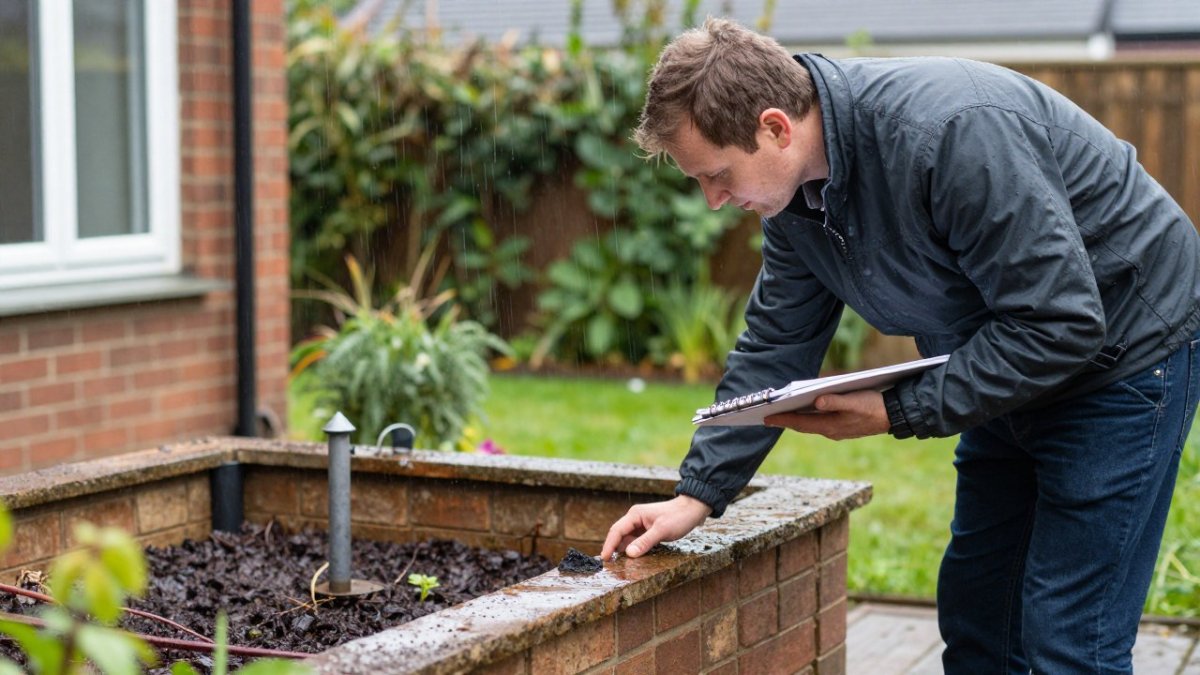
Ask yourself three questions before choosing:
- How well does the ground drain? A simple percolation test on a dug hole can help answer this.
- Where can the water safely go? Consider neighbours, boundaries and existing drains.
- How much space and maintenance can you commit to?
Rain Gardens, Planted Areas and Permeable Paving
A rain garden is a shallow, planted dip that collects runoff from a roof or paved area and lets it soak into the ground. Planted areas do the same job on a smaller scale. Permeable paving lets water pass through the surface into a granular base below.
These options work best on:
- Gently sloping gardens with free-draining soil
- Driveways and patios where you want to reduce runoff at source
- Sites where you want the water to soak in rather than leave the property
Water Butts and Soakaways
A water butt stores roof water for later use in the garden, which can reduce the volume reaching your drains during a storm. A soakaway is a buried chamber filled with stone that lets water soak away into the ground.
Consider a water butt when:
- You have a modest roof area and want a water supply for the garden
- You want to cut the volume of water going into the drains
Consider a soakaway when:
- Your soil drains reasonably well
- You need to remove larger volumes of runoff from a roof or hard surface
Soakaway Installation Requirements and Safe Overflow Planning
A soakaway only works if the ground beneath it can take the water. Before you dig, you need to know two things: how quickly the soil drains, and how high the groundwater sits in wet weather. Both affect whether a soakaway will function or simply fill and stay full.
To check drainage speed, dig a test hole roughly 300 mm square and 300 mm deep, fill it with water, and time how long the level takes to fall. Repeat the test two or three times, because the first fill often soaks in faster than later ones.
Groundwater matters just as much. If you dig a trial hole in late winter and find water within about 1 m of the base of the planned soakaway, the chamber will spend much of the year sitting in water. Local knowledge helps here.
Position is equally important. Keep a soakaway well clear of building foundations, usually at least 5 m from the house, and check the setback that your local building control team expects.
Plan the overflow before you install anything. No soakaway can handle every storm, so decide in advance where surplus water will go once the chamber is full.
Watch out: a soakaway that appears to work in summer can fail in a wet winter. Test the site during a period of heavy rain if you can, or ask a drainage professional to assess groundwater levels before you commit.
For a more reliable result, design the soakaway alongside planted features and controlled outlets rather than as a stand-alone fix. This gives you several routes for water to take when conditions change.
The article's key installation checks and distances are summarised below, so you can see the main requirements at a glance.
| Check or setting | Value in article | Note |
|---|---|---|
| Test hole size | 300 mm square | Dug to test drainage speed |
| Test hole depth | 300 mm deep | Filled with water to time drop |
| Repeat tests | Two or three times | First fill often soaks faster |
| Standing water limit | 24 hours | Longer suggests unsuitable ground |
| Groundwater clearance | About 1 m | Water closer means year-round wet base |
| Distance from house | At least 5 m | Check local building control setback |
Flood Risk Assessment for Homeowners: When You Need One
A flood risk assessment looks at how water could reach your property from rivers, surface water, groundwater or sewers. It also considers how your planned drainage affects flood risk on the site and nearby.
You may need one when:
- You are building a new home or a large extension
- Your site lies in an area with a known flood history
- Your local planning authority asks for one as part of an application
For homeowners, a flood risk assessment is often the document that shows a council your drainage will work safely. It is a professional task, so arrange it through a qualified consultant rather than assuming a general check is enough.
Costs, Permissions and Maintenance of Your Stormwater Plan
Costs depend on the size of the site, the soil, the measures chosen and how much excavation is needed. For current prices or a quote, please contact The Drainage Designers (Woodvale consulting Ltd) directly. Get written quotes from qualified contractors, and make sure each one describes the same scope of work so you can compare them fairly.
Some tasks suit a capable DIY homeowner. Fitting a water butt, extending a downpipe into a planted bed, or clearing and replanting a shallow rain garden are generally within reach. Excavating a soakaway, laying permeable paving on a sloping site, or connecting to a public sewer usually calls for a professional. Mistakes in these areas are costly to put right, and a poorly built soakaway can damage foundations.
Permissions need checking before work starts. Digging near a public sewer, a watercourse or a shared boundary may need consent from your water company, the Environment Agency or the local authority, depending on the location. Building regulations can apply to some drainage work, and changes to hard surfaces at the front of a property can require planning permission in certain cases. Your local council's planning and building control pages set out the current position, and a short call before you start can save a lot of trouble.
Maintenance determines how long the system keeps working. A realistic schedule looks like this:
- Gutters and downpipes: clear at least twice a year, and after heavy leaf fall
- Gullies and inspection chambers: lift the cover and remove silt and leaves every few months
- Rain gardens: remove silt build-up each year, check plant health and top up mulch
- Water butts: empty or drain before winter to avoid frost damage, and clean the first-flush filter regularly
- Soakaways: inspect the surface and overflow route after heavy rain, and check that water clears within a day or two
- Permeable paving: vacuum or brush off moss and fine debris, and check for surface clogging that slows drainage
With regular upkeep, a well-built soakaway and permeable paving can last for decades, while plant-based features and water butts often need replacing sooner, as plants and materials age. Planning for this in advance makes the total cost of ownership easier to judge, and it keeps the system working when you need it most.
Booking Your Drainage Assessment With The Drainage Designers
Every site is different, so a tailored plan works better than a generic fix. The Drainage Designers (Woodvale Consulting Ltd) offers site visits, flood risk assessments and drainage design, and helps with the council approval process.
Get in touch to book a drainage assessment and get a clear plan for your site.
Frequently Asked Questions
What are the best ways to manage stormwater on a residential property?
The most effective approach combines several measures rather than relying on one. Start by identifying where water collects, then direct roof runoff into water butts or soakaways, plant rain gardens in low spots, and replace hard surfaces such as driveways with permeable paving where possible. Each measure reduces the volume of water reaching drains and helps prevent garden flooding. Matching the solution to your site's soil and slope gives the best results, and a drainage professional can confirm what works on your specific plot.
Do I need planning permission for drainage improvements in the UK?
Many small drainage works on a domestic property do not need planning permission, but this depends on the scope of the work, your property type and local council rules. Changes that affect the public sewer, alter a boundary or involve significant excavation may require approval or consent from the relevant authority. Building Regulations may also apply to new soakaways and connections. Check with your local planning authority before starting, or ask a drainage designer to confirm the requirements for your project.
How can permeable paving help with stormwater management?
Permeable paving allows rainwater to soak through the surface into the ground or a sub-base, rather than running off into drains. Replacing a solid driveway or patio with permeable materials reduces the volume of surface water and slows peak flows during heavy rain. It works best where the ground beneath is suitable for infiltration, so a site assessment is important before installation. Maintenance, such as periodic clearing of the joints, keeps the surface performing over time.
What is a SuDS (Sustainable Drainage System) for homeowners?
A Sustainable Drainage System, or SuDS, is a set of techniques that manage rainwater close to where it falls, mimicking natural drainage. For homeowners, common examples include rain gardens, permeable paving, green roofs and soakaways. SuDS aim to reduce flood risk, filter pollutants and protect water quality. Many planning applications require SuDS to be considered, so including them early in a project can help with approval.