 Knowledge Centre
7 Steps to Maximise Planning Permission Success
Last Updated: 30 October 2026
Quick Summary
To maximise planning permission success, confirm whether your project needs approval, submit a complete application with drainage and flood risk evidence ready, and respond fully to any conditions. Drainage is the most common technical gap, so sort it before you submit rather than after a refusal.
- Check permitted development limits and any Article 4 directions before spending money on drawings.
- A complete application needs the form, fee, plans, drawings and supporting reports such as drainage.
- A drainage strategy must satisfy both the local planning authority and the lead local flood authority.
- The decision clock only starts once your application is valid, so incomplete submissions sit unvalidated.
- Read every condition, note the deadline and submit the exact evidence requested.
Table of Contents
- What Planning Permission Success Really Depends On
- Step 1: Confirm Whether Your Project Needs Planning Permission
- Step 2: Work Through the Planning Application Checklist for Homeowners
- Step 3: Get the Drainage Strategy for Planning Permission Right Early
- Step 4: Avoid the Common Reasons for Planning Permission Refusal
- Step 5: Understand the Planning Permission Decision Timescale
- Step 6: Respond Properly to Conditions and Requests
- Get Your Drainage Design Reviewed Before You Submit
- Frequently Asked Questions
What Planning Permission Success Really Depends On
Most homeowners think planning permission is a design contest. It isn't. It's a paperwork and evidence exercise, and the applications that sail through are the ones where the drainage and site details were sorted before submission, not after a refusal. This guide walks through the steps that decide whether your new build or extension gets approved first time around. Below, we'll show you what each stage demands and where applications most often come unstuck.
Planning permission is the formal approval a local planning authority must grant before most new builds, extensions and changes of use can go ahead. Success depends less on how good your drawings look and more on whether your application answers every question the case officer will ask. Get that right and the process is predictable. Get it wrong and you lose months.
Here's the thing most guides miss: drainage is where domestic applications quietly fail. It sits near the bottom of most homeowners' to-do lists and near the top of the council's list of reasons to refuse.
Step 1: Confirm Whether Your Project Needs Planning Permission
Start by checking, not assuming. Some extensions fall under permitted development and need no application at all, while others need full approval (Permitted Development Rights - Planning Permission). The rules vary by property type, conservation area status and whether the home is listed.
Use the government's Planning Portal interactive guide to permitted development to test your project against the current rules. If it flags that you need approval, get a clear steer before you spend money on drawings.
A step-by-step guide to how to get planning permission for drainage helps you confirm whether your project needs approval and what evidence to prepare.
- Check permitted development limits first
- Confirm conservation area or listed building status
- Note any Article 4 directions that remove your automatic rights
- Ask the council's duty planner for an early view
Step 2: Work Through the Planning Application Checklist for Homeowners
A complete planning application checklist for homeowners covers four core areas: the application form and fee, location and site plans, existing and proposed drawings, and supporting reports such as drainage and flood risk.
Miss one document and the council will validate nothing. Your application sits in a queue doing nothing while your build programme slips.
Documents Most Applications Are Missing
- A drainage strategy or surface water plan
- A flood risk assessment where the site is in a higher-risk zone
- A design and access statement for larger schemes
- Correct ownership certificates and notices
- A clear site location plan at the right scale
The drainage strategy report for planning explains how to prepare the report most applications require. Read it before you assemble your submission pack.
Step 3: Get the Drainage Strategy for Planning Permission Right Early
Drainage is the single most common technical gap in domestic applications. A drainage strategy for planning permission sets out how foul water and surface water will be managed, and it must satisfy both the local planning authority and the lead local flood authority.
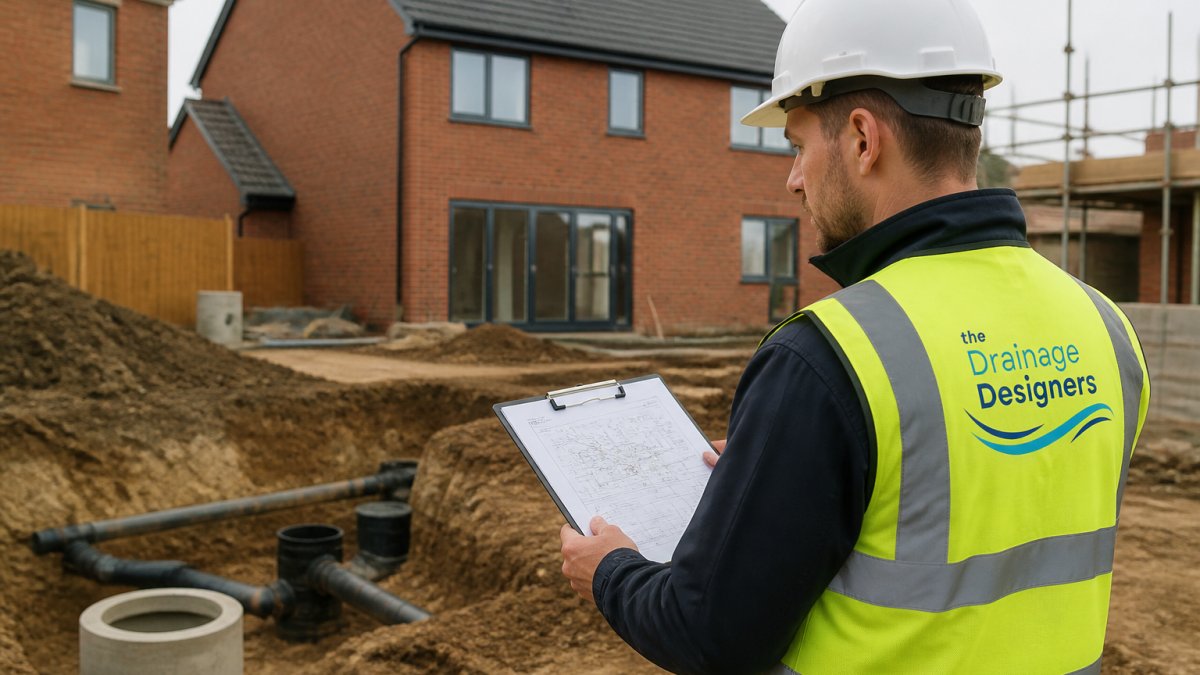
Leave it late and you'll be asked for it anyway, usually as a condition that holds up your start date. Build it into the first submission.
Our focused guide to drainage strategies for minor planning applications covers the detail this section only introduces.
Step 4: Avoid the Common Reasons for Planning Permission Refusal
Refusals are rarely about taste. The common reasons for planning permission refusal are predictable, and most are avoidable with a bit of preparation.
- Missing or weak drainage and flood risk information
- Overlooking or loss of light to neighbours
- Design that clashes with the street scene
- Insufficient parking or access
- Incomplete or contradictory plans
Understanding why drainage plans fail council approval helps you sidestep the most frequent refusal reason before it costs you a resubmission.
Step 5: Understand the Planning Permission Decision Timescale
The planning permission decision timescale depends on the type of application. Councils work to statutory targets, but the clock only starts once your application is valid. An incomplete submission can sit unvalidated for weeks.
Watch out: submitting before your drainage evidence is ready is the fastest way to stretch a standard decision period into months of back-and-forth.
- Validation: days to a few weeks
- Determination: depends on the type of application and the council's own timescales
- Extensions of time: common where further information is requested
Check your council's own stated timescales, as performance varies. The government guidance on planning application fees and process sets out the national framework.
The clock only starts once your application is valid, so here is how the stages break down.
| Stage | What happens | Note |
|---|---|---|
| Validation | Days to a few weeks | Clock starts only once application is valid |
| Determination | Depends on application type and council | Councils work to statutory targets |
| Extensions of time | Common where further information is requested | Can stretch a standard period into months |
Step 6: Respond Properly to Conditions and Requests
Approval often comes with conditions attached. Respond to them fully and promptly, because a condition left unanswered can stall your start on site.
A step-by-step guide to clearing planning drainage conditions shows you exactly how to respond to each condition the council sets.
- Read every condition and note the deadline
- Submit the exact evidence requested, not a summary
- Keep a written record of each response
- Follow up if you don't hear back within the stated period
Get Your Drainage Design Reviewed Before You Submit
The applications that succeed share one trait: the drainage was right before the council ever saw it. That's the challenge we solve. At The Drainage Designers, we review your drainage design, prepare the strategy your local authority and lead local flood authority expect, and help you avoid the conditions that delay a start on site. Our nationwide team handles everything from site visits to final approvals, with a transparent customer charter so you know where you stand at every stage.
Get started with The Drainage Designers and submit a well-prepared application.
Frequently Asked Questions
How can I improve my chances of getting planning permission?
Submit complete drawings, a site plan and a drainage strategy that matches your council's local requirements before the validation stage. Check the local plan for designations such as flood zones or conservation areas, and speak to a planning officer early about anything unclear. Most refusals trace back to missing information or a design that conflicts with adopted policy, so getting the paperwork and the drainage detail right first time around removes the two most avoidable causes of delay.
Do I need a drainage strategy for a new build or extension?
For most new builds, and for extensions that add impermeable surfacing or trigger flood risk requirements, you will need to show how surface water and foul drainage will be managed. A drainage strategy for planning permission sets out run-off rates, attenuation, and how the hierarchy of disposal options has been followed. Local planning authorities and lead local flood authorities increasingly ask for this at validation, so preparing it early avoids a request for further information.
What are the most common reasons planning applications are refused?
The usual causes are incomplete or inconsistent drawings, a design that conflicts with local plan policy, overlooking or loss of light affecting neighbours, insufficient parking or access, and missing flood risk or drainage information. Refusals often cite more than one reason. Reviewing the officer's report from similar local applications before you submit shows which issues the authority treats as decisive, and lets you address them in the design rather than in an appeal.
How long does a planning permission decision usually take?
Local planning authorities work to statutory determination periods that vary by application type. In practice, requests for further information or an agreed extension of time can push this out. Submitting a complete application, including drainage and flood risk detail, reduces the chance of your file sitting on hold while the authority waits for missing documents.
Planning approval is a race against your own build programme, and drainage is where it's most often lost. If you want your design checked before it goes in, get in touch with The Drainage Designers and we'll review it against what your council actually expects.