 Knowledge Centre
Drainage Plan Validation: On-Time vs Approval Success
Table of Contents
- The Real Trade-Off Behind Drainage Plan Validation
- Why Speed and Approval Often Pull in Opposite Directions
- The Drainage Plan Validation Checklist That Prevents Both Delays and Rejections
- Surface Water Drainage Assessment for Planning: Getting the Technical Detail Right First Time
- Drainage Strategy Submission Requirements: What the Council Actually Needs
- The Drainage Plan Approval Process: Where Timelines Slip
- When to Push for Speed and When to Slow Down
- Conclusion
- Frequently Asked Questions
Last Updated: 15 October 2026
The Real Trade-Off Behind Drainage Plan Validation
Every residential project runs on two clocks. One measures the build. The other measures the council. When those clocks disagree, drainage plan validation becomes the point where schedules quietly fall apart.
At The Drainage Designers (Woodvale Consulting Ltd), we see this tension on almost every job. A homeowner wants to break ground. A planning officer wants the surface water strategy to stack up before anyone lifts a spade. Those two goals pull against each other more often than most guides admit.
This article compares the two objectives head-on: getting projects delivered on schedule, and maximising planning permission success for drainage plan validation. Below, we break down where each approach wins, where it costs you, and how to balance both without gambling on a resubmission.
Why Speed and Approval Often Pull in Opposite Directions
Speed rewards early action. Approval rewards early evidence. These are not the same thing.
Rushing a drainage submission usually means submitting before the technical detail is complete. The council then raises conditions, requests further information, or rejects outright. Each of those outcomes adds weeks, not days. A fast submission that fails is slower than a careful one that passes.
The reverse is also true. Over-preparing every minor domestic extension as though it were a commercial scheme wastes time and money. The trick is matching the level of detail to the risk of the site.
The Drainage Plan Validation Checklist That Prevents Both Delays and Rejections
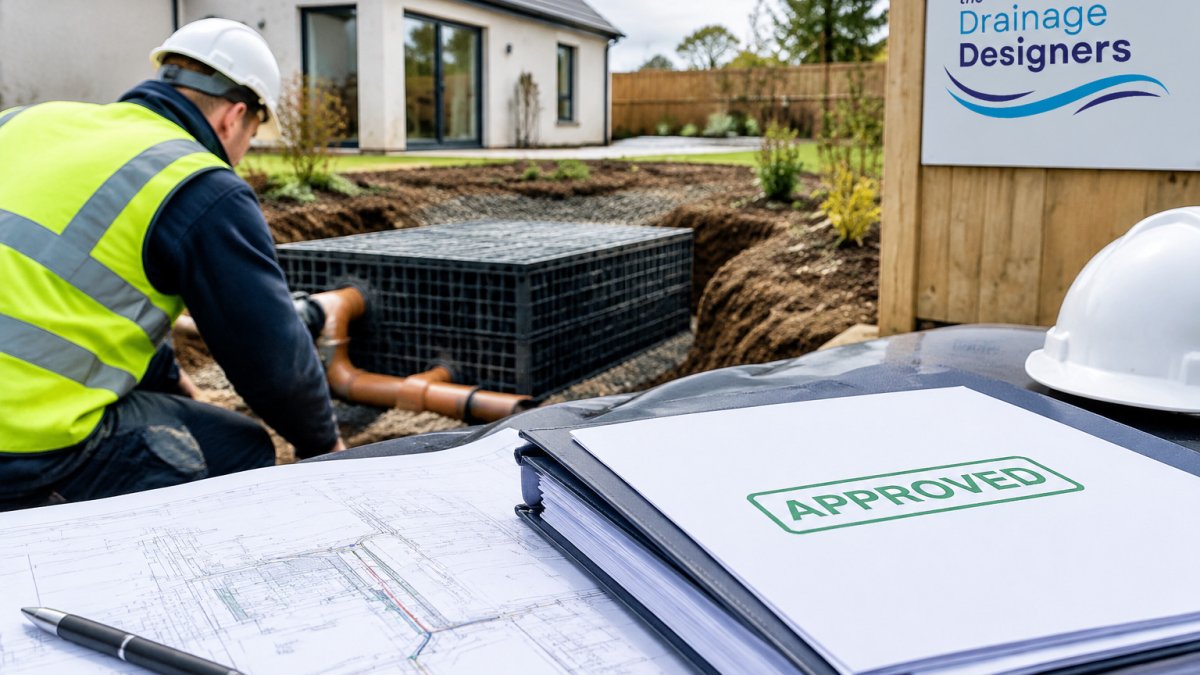
A validation checklist is the closest thing to a shortcut that actually works. It lets you move quickly because nothing critical is missing.
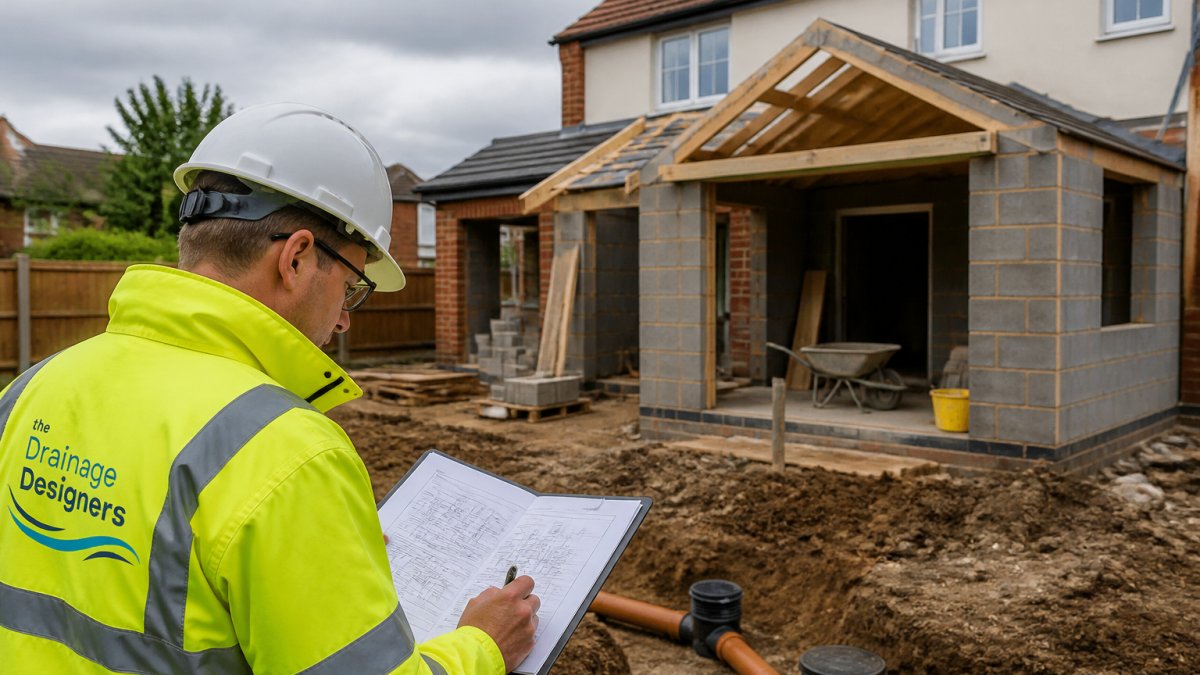
Most delays trace back to a handful of gaps. Work through these before submission:
- Confirm whether the site falls under a Lead Local Flood Authority consultation
- Check the local authority's own validation checklist for drainage
- Establish existing runoff rates and discharge locations
- Confirm ground conditions and, where needed, infiltration testing
- Show how surface water will be managed in exceedance events
- Demonstrate a clear maintenance and adoption route
- Cross-check the drainage strategy against the layout drawings
- Confirm the hierarchy of drainage options has been followed
The point is not to slow you down. It is to remove the reasons a council can send the application back.
Surface Water Drainage Assessment for Planning: Getting the Technical Detail Right First Time
A surface water drainage assessment for planning explains where rainwater goes, how much of it, and why the chosen approach is acceptable. Get that explanation right and the rest of the validation tends to follow.
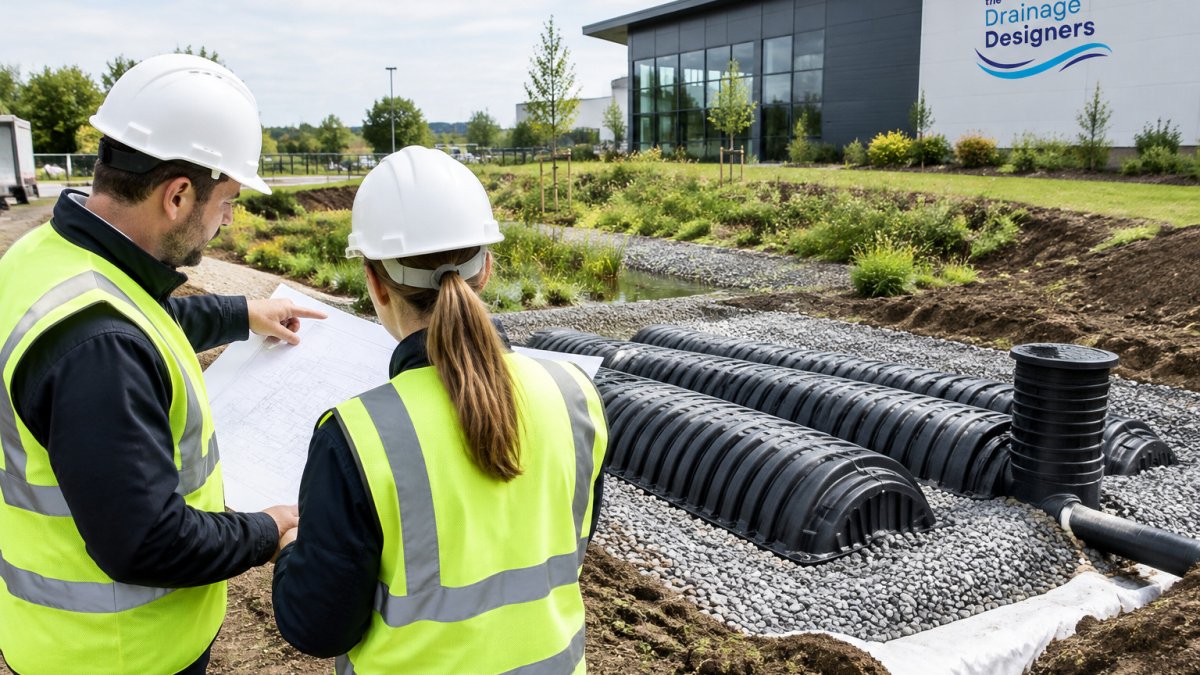
The hierarchy matters here. Drainage should follow a preferred order of options, moving from the most sustainable to the least. Discharge to a watercourse or sewer is generally a last resort, not a first choice. Councils look for evidence that the earlier options were considered and ruled out for a reason.
What most guides miss is that the assessment is a reasoning document, not just a set of calculations. Officers want to see the logic. A well-argued strategy that acknowledges site constraints is stronger than a technically tidy one that ignores them.
Drainage Strategy Submission Requirements: What the Council Actually Needs
Submission requirements vary, and that variance is where many applications stumble. Two neighbouring authorities can ask for different levels of detail for near-identical schemes.
The core requirements are usually consistent, though:
| Requirement | What It Covers | Why It Matters |
|---|---|---|
| Drainage strategy report | Overall approach and rationale | Sets out the case for the design |
| Site layout drawings | Pipe routes, storage, outfalls | Shows the design fits the site |
| Calculations | Runoff rates and storage volumes | Proves the design performs |
| Ground data | Infiltration and soil conditions | Supports the chosen method |
| Maintenance plan | Ongoing responsibility | Confirms long-term function |
Treat this as a baseline, not a guarantee. Always check the specific authority's published validation list, because it is the version the officer will actually apply.
The Drainage Plan Approval Process: Where Timelines Slip
The drainage plan approval process rarely fails at the decision stage. It fails earlier, in the gaps between submission and validation.
Here is where time is genuinely lost:
- Waiting on ground investigation results after submission
- Resubmitting corrected drawings that should have been checked first
- Answering further information requests one at a time instead of in full
- Discovering a layout change invalidates the drainage strategy
- Missing the consultation window with the flood authority
None of these are dramatic. Together, they can add weeks to a project. The pattern is consistent: the delay is almost never the council's decision speed. It is the number of round trips before a decision becomes possible.
When to Push for Speed and When to Slow Down
Push for speed when the site is straightforward. A small extension with good ground conditions and a clear discharge route does not need the same treatment as a flood-risk site.
Slow down when the risk is high. Sites near a watercourse, sites with poor infiltration, and sites in a flood zone all justify more upfront work. The cost of that extra care is almost always less than the cost of a rejection and resubmission.
The practical rule we apply is simple. Spend your time where the uncertainty is. If you do not know how the ground behaves, find out before you submit. If you do, move.
Conclusion
The tension between speed and approval is real, but it is not a coin toss. It is a decision about where to invest effort. Sites with high uncertainty deserve patience. Sites with low uncertainty reward momentum.
Getting that balance right is exactly what we do. The Drainage Designers (Woodvale Consulting Ltd) handle the full route, from site visits and flood risk assessments through to compliant designs and council approvals. Our work is built around the Local Authority and Lead Local Flood Authority requirements that actually decide your application.
If you want your project delivered on schedule without gambling on a rejection, get in touch. We will tell you honestly where your site sits and what it needs.
Frequently Asked Questions
What does a drainage plan need to include for planning permission?
A drainage plan for planning permission must show how surface water and foul water will be managed. It typically includes site layout drawings, pipe routes, SuDS features, discharge rates, and connection points. For most residential projects, you also need a surface water drainage assessment confirming you meet the non-statutory technical standards. The local planning authority and Lead Local Flood Authority will check these details during drainage plan validation, so missing elements are the most common reason for rejection.
Why might a drainage strategy be rejected during planning review?
Rejections usually happen because the drainage strategy submission requirements were not fully met. Common causes include missing surface water drainage calculations, inadequate SuDS provision, unclear discharge locations, or failure to address flood risk. Some applications also fail because the drainage plan approval process was not followed correctly, such as submitting before a site investigation or using outdated rainfall data. Checking the drainage plan validation checklist before submission reduces this risk significantly.
How can drainage plan validation help prevent project delays?
Thorough drainage plan validation catches errors before the council reviews your application. When your surface water drainage assessment for planning is complete and your drawings match local requirements, you avoid the back-and-forth of condition discharge requests. This keeps your drainage plan approval process on track and protects your construction timeline. Investing time upfront in validation is usually faster than responding to rejection queries after submission.
Do house extensions need a drainage assessment for planning permission?
Not every extension requires a full drainage assessment, but many do. If your extension increases impermeable area, affects existing drainage routes, or sits in a flood risk zone, the local planning authority will likely ask for drainage details. Even small extensions can trigger conditions requiring a surface water drainage assessment for planning. Checking with your local authority early, or using a drainage plan validation checklist, helps you know what is needed before you submit.