 Knowledge Centre
Are Civil Engineering Partnerships Worth It for Architects?
Last Updated: 26 October 2026
Quick Summary
A civil engineering partnership gives architects access to drainage design, flood risk assessment and SuDS expertise, with the partner taking ownership of the drainage strategy so you can stay focused on the building itself. Bringing that expertise in early means drainage, levels and site layout are coordinated before they are fixed in drawings.
- Drainage design demonstrates that surface and foul water can be managed without increasing flood risk.
- Early design coordination brings drainage, levels and site layout together before drawings are fixed.
- The Drainage Designers' services include site visits, flood risk assessments, drainage design and SuDS.
- They also liaise with local councils as part of the service.
- Avoid choosing on fee alone, then paying for revisions later.
Table of Contents
- What a Civil Engineering Partnership Actually Gives an Architect
- Drainage Design for Architects: Why It Decides Your Planning Application
- The Benefits of Early Design Coordination on Live Projects
- The Civil Engineer Role in Building Projects, Explained Plainly
- Civil Engineering Services for Architects: What to Expect From a Partner
- Common Mistakes Architects Make When Bringing in a Civil Engineer
- Choosing a Drainage Design Partner for Your Next Project
- Frequently Asked Questions
What a Civil Engineering Partnership Actually Gives an Architect
A civil engineering partnership can give architects access to drainage design, flood risk assessment and SuDS expertise. The benefits of a civil engineering partnership for architects can include having someone take ownership of the drainage strategy, so you can stay focused on the building itself.
Drainage is rarely the glamorous part of a project. A partnership can bring drainage expertise into the project before a validation query arises.
Below, we break down what that partnership covers, where it earns its keep, and how to choose the right partner.
Drainage Design for Architects: Why It Decides Your Planning Application
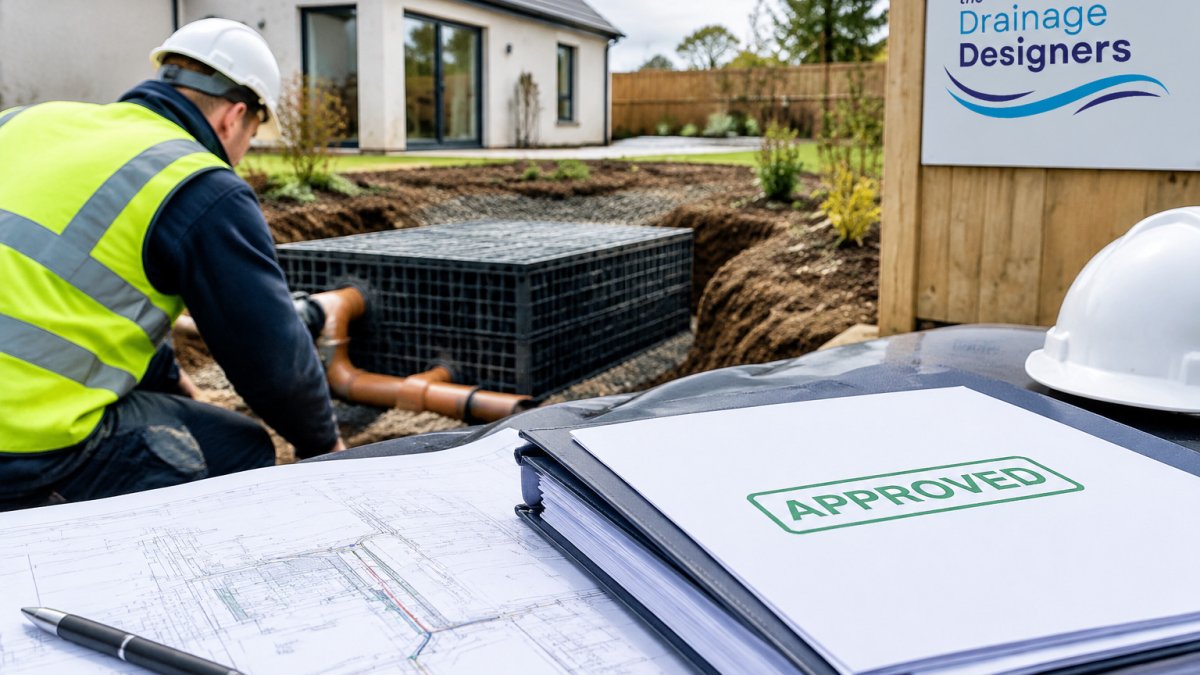
Drainage design for architects is the process of demonstrating, through drawings and calculations, that surface water and foul water from a development can be managed without increasing flood risk.
Get this wrong and the whole application slows down. Get it right and the drainage section becomes a formality rather than a battleground. The government guidance on sustainable drainage systems sets out how SuDS should be prioritised, and authorities apply that framework when they assess your scheme.
Requirements can vary between councils. If you want the full picture of how a drainage strategy supports an application, our guide on drainage strategy for planning application walks through each stage.
The Benefits of Early Design Coordination on Live Projects
Early design coordination can bring drainage, levels and site layout together before they are incorporated into drawings.
The Civil Engineer Role in Building Projects, Explained Plainly
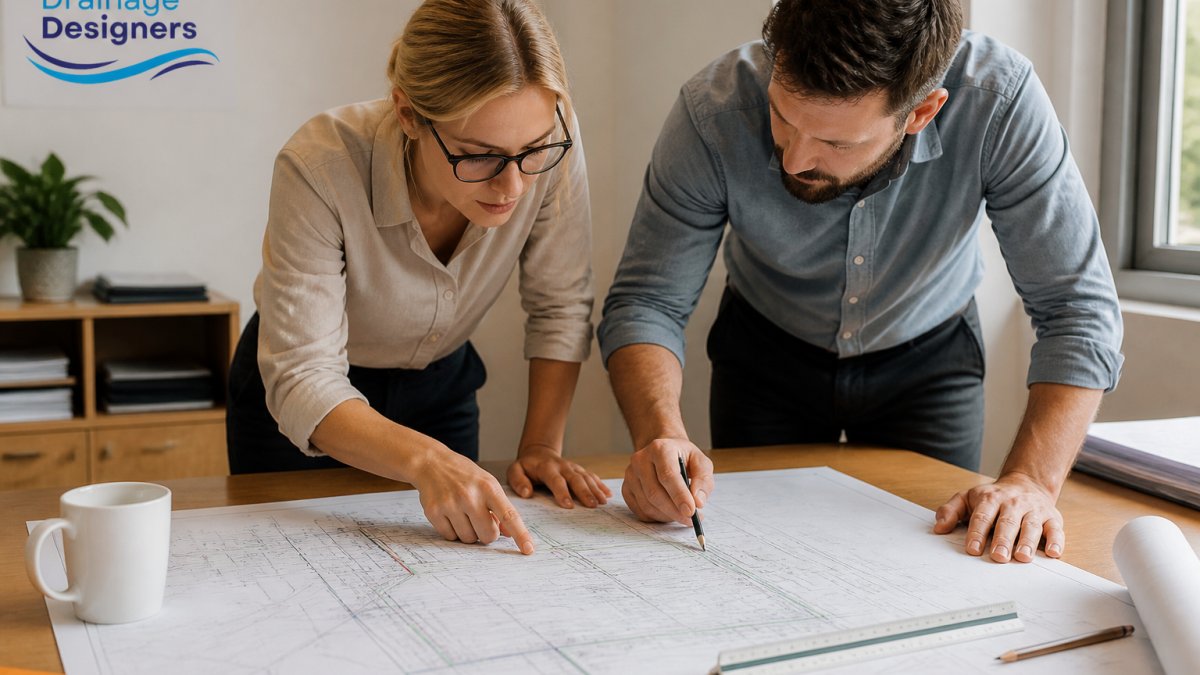
The civil engineer role in building projects can include designing and documenting drainage and, where relevant, flood risk and SuDS.
Our guide to the role of civil engineers in drainage design explains the technical scope in more depth if you need it for a client conversation.
Civil Engineering Services for Architects: What to Expect From a Partner
The Drainage Designers provide a comprehensive service from site visits to final approvals.
The Drainage Designers' verified services include:
- Site visits
- Flood risk assessments
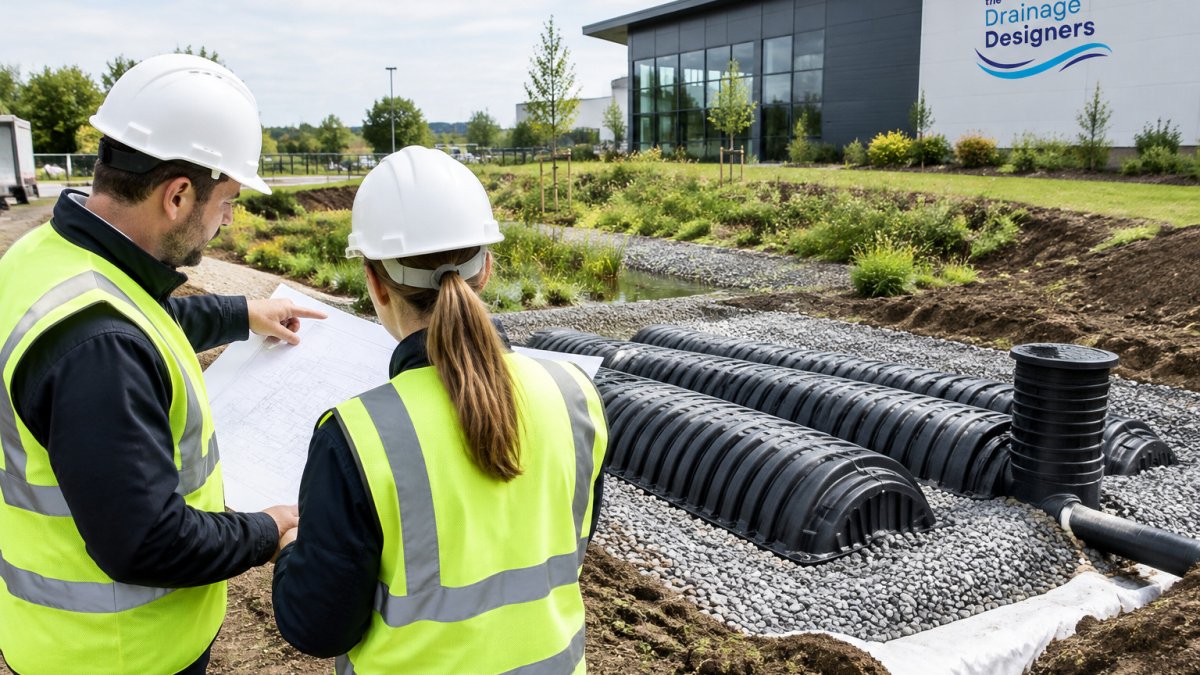
- Drainage design and SuDS
- Liaison with local councils
Our overview of professional drainage design services sets out the scope we provide.
The Drainage Designers' verified services cover the following areas.
| Service | What it covers |
|---|---|
| Site visits | Visiting the site as part of the service |
| Flood risk assessments | Assessing flood risk for the development |
| Drainage design and SuDS | Designing drainage and sustainable drainage systems |
| Liaison with local councils | Contact with the local authority |
Common Mistakes Architects Make When Bringing in a Civil Engineer
Other pitfalls we see:
- Choosing on fee alone, then paying for revisions later
- Not checking the partner's familiarity with the specific local authority
- Leaving SuDS to the last minute, when the site has no room left for attenuation
Choosing a Drainage Design Partner for Your Next Project
When choosing a drainage design partner, consider the scope of services and what support is included after submission.
Ask any potential partner:
- What services do you provide?
- What support is included after submission?
Our guide on choosing the right drainage consultant gives you a practical framework for that decision.
The Drainage Designers provide site visits, flood risk assessments, SuDS design and liaison with local councils. We work with architects, homeowners and developers across the country, from bespoke domestic renovations to commercial schemes. Get in touch with The Drainage Designers.
Frequently Asked Questions
What are the benefits of architects working with civil engineers?
A civil engineering partnership can provide access to drainage design, flood risk assessments and SuDS expertise.
When should an architect involve a civil engineer in a project?
The Drainage Designers provide drainage design and flood risk assessments. The appropriate timing for involving a civil engineer depends on the project.
Do architects need civil engineering input for drainage design on small extensions?
The Drainage Designers provide drainage design solutions for homeowners, including those undertaking extensions and new builds. The services include flood risk assessments and SuDS design.
How do I know a civil engineering partner understands my local authority's requirements?
Ask them directly how they approach local authority requirements. The Drainage Designers provide a transparent and ethical customer charter and support projects through the planning process.